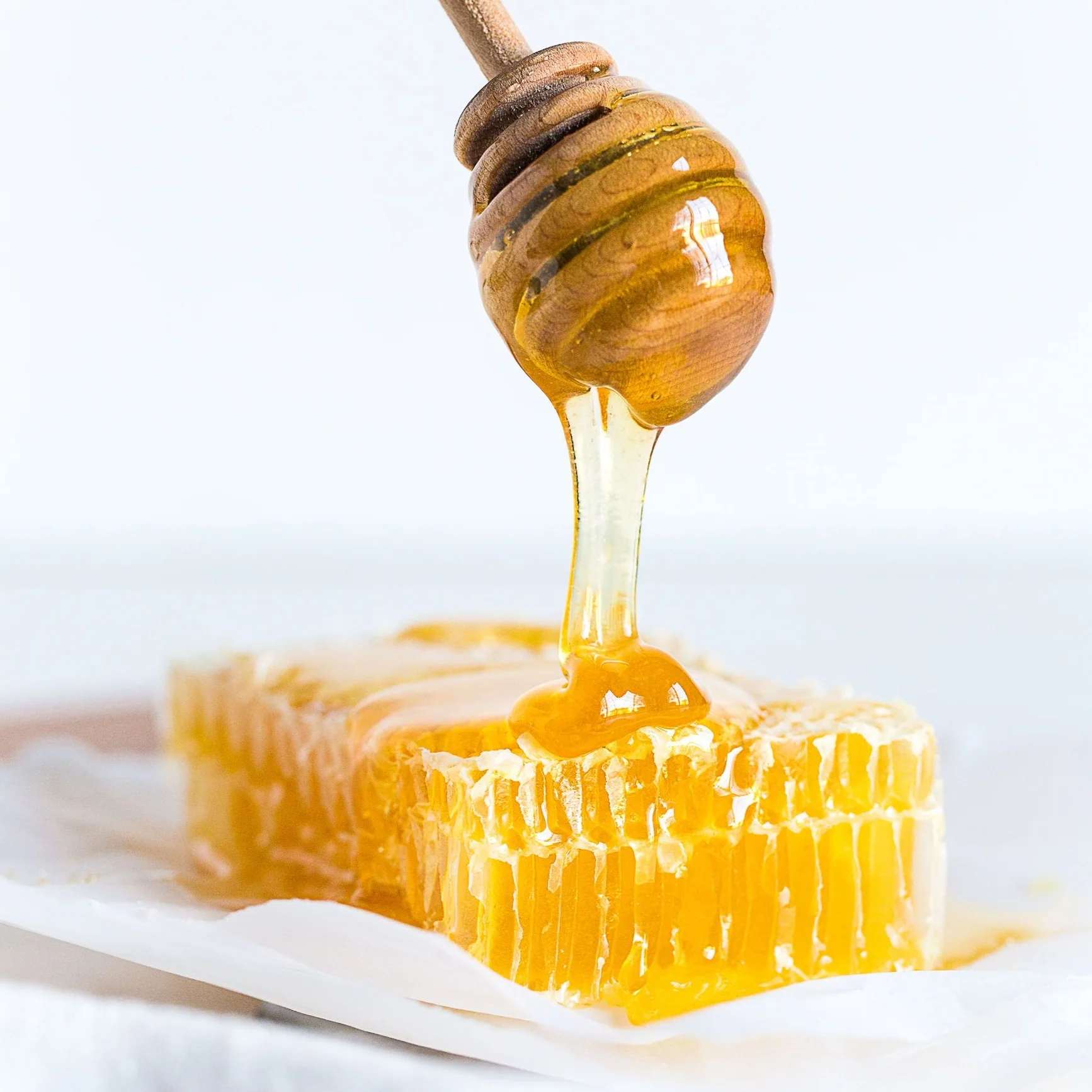
Choosing between honeycomb and creamed honey can be a delicious dilemma for any natural food lover. While honeycomb offers the most primitive, raw experience of the hive, creamed honey provides a silky, spreadable texture that is often mistaken for dairy-infused treats. At Hani Honey Company, the philosophy centers on bringing these honey varieties from the bees straight to you without unnecessary processing. Whether you are looking for the chewy, wax-rich texture of honeycomb or the buttery consistency of creamed honey, understanding how these products are crafted at Hani Honey Company helps you appreciate the true artistry of the honey bee.
The Raw Truth About Honeycomb: Nature’s Original Candy
Honeycomb is exactly what it sounds like: honey in its most original, untouched state. When you purchase a square of honeycomb, you are getting the hexagonal wax cells built by the bees, filled with nectar, and capped with a thin layer of wax. It is the closest you can get to sticking your hand into a hive and pulling out a snack.
For many, the appeal of honeycomb lies in its complexity. It isn’t just about the liquid gold inside; it’s about the beeswax, the trace amounts of bee pollen, and the propolis that come with it. When you take a bite, the wax provides a unique chewing experience, often compared to a natural gum. You can chew it until the flavor fades and then either swallow the wax (which is perfectly safe and contains long-chain fatty acids) or discard it.
The Benefits of Eating Honeycomb
Eating honey in this form preserves all the volatile aromas that are often lost during the bottling process. Because it hasn’t been filtered or heated, the pollen counts are at their highest, which is a major draw for those looking for local seasonal benefits. Additionally, the presence of propolis—often called “bee glue”—adds a layer of antimicrobial properties that you won’t find in highly processed supermarket honey.
Pros of Honeycomb
-
It is the most aesthetically pleasing way to serve honey, especially on a charcuterie board.
-
It provides a multi-sensory experience with a distinct chew.
-
It contains the highest concentration of natural enzymes and antioxidants.
-
It never “goes bad” because the wax acts as a natural airtight seal.
Cons of Honeycomb
-
The wax texture can be polarizing for those who prefer a smooth liquid.
-
It can be messy to handle and difficult to spread on delicate breads.
-
It is typically more expensive due to the labor the bees must undergo to build the wax.
Creamed Honey: The Silky Sophistication of Controlled Crystallization
If honeycomb is the wild, rugged version of the hive, then creamed honey is its refined, sophisticated cousin. Despite the name, there is no dairy involved. Creamed honey is 100% pure honey that has undergone a process of controlled crystallization.
Most people have experienced “gritty” honey—that’s what happens when honey crystallizes naturally and forms large, jagged sugar crystals. To make creamed honey, a beekeeper introduces a “seed” of very fine crystals and keeps the honey at a cool temperature. This forces the entire batch to crystallize into tiny, microscopic grains that are so small the human tongue perceives them as a smooth, buttery cream.
Why You’ll Love the Texture
The beauty of creamed honey is its “dripless” nature. Unlike liquid honey, which inevitably runs down the side of the jar or off your toast, creamed honey stays exactly where you put it. It has the consistency of room-temperature butter, making it the perfect companion for biscuits, pancakes, or even a simple slice of sourdough.
Pros of Creamed Honey
-
Perfectly spreadable and completely mess-free.
-
An incredibly smooth, luxurious mouthfeel that feels like a decadent dessert.
-
It maintains a stable consistency and won’t get “harder” over time like liquid honey might.
-
Ideal for children because it doesn’t drip onto clothes or counters.
Cons of Creamed Honey
-
It requires specific storage temperatures (usually cool) to maintain that perfect set.
-
It lacks the textural “crunch” or chew that some honey enthusiasts crave.
-
Because it is opaque, you don’t get that classic “golden glow” appearance of liquid honey.
Company Integration: Hani Honey Company
When seeking out these delicacies, the source matters immensely. Hani Honey Company is a family-owned and operated apiary that prioritizes the health of their bees and the purity of their harvest. Based in Florida, they manage hives across Martin, St. Lucie, and Palm Beach counties, ensuring their bees forage on diverse native plants like Saw Palmetto and Orange Blossom without the use of harsh chemicals.
You can explore their full range of artisanal products, including their exquisite Raw Creamed Honey and fresh Honeycomb, by visiting their website: https://hanihoneycompany.com/.
The team at Hani Honey Company is led by Master Beekeepers who treat apiculture as both a science and an art. Whether they are harvesting seasonal Wildflower honey or crafting small-batch infusions, their commitment to “Beeing” a responsible part of the ecosystem shines through in every jar.
The Verdict: Which One Should You Choose?
The “better” honey depends entirely on your intended use. If you are hosting a dinner party and want a show-stopping centerpiece for a cheese plate, honeycomb is the undisputed winner. It pairs beautifully with sharp cheddars, salty prosciuttos, and tart green apples. On page 12 of many gourmet cookbooks, you’ll find that the contrast of the chewy wax and the burst of liquid nectar is a favorite among professional chefs for adding “texture” to a dish.
However, for daily use, creamed honey is often the practical favorite. If you’ve ever tried to drizzle honey into a cup of tea or onto a morning bagel only to have it end up on your fingers, you will appreciate the disciplined, spoonable nature of the creamed variety. It is the ultimate “utility” honey that feels like a luxury.
Tips for Getting the Most Out of Your Honey
-
Store your honeycomb at room temperature; refrigeration can cause the honey inside to crystallize prematurely.
-
If your creamed honey begins to soften too much in a hot kitchen, a few minutes in the fridge will firm it back up to that buttery state.
-
Try a “Honeycomb Sandwich”—a thin slice of honeycomb between two pieces of warm toast. The heat softens the wax just enough to make it melt into the bread.
-
Use creamed honey as a glaze for roasted carrots or salmon; its thickness helps it adhere to the food better than liquid honey.
Final Thoughts on the Hive’s Best Offerings
At the end of the day, both honeycomb and creamed honey represent the incredible work of the honey bee. One is a testament to the architecture of the hive, and the other is a testament to the beekeeper’s skill in managing nature’s natural processes.
By choosing products from a reputable source like Hani Honey Company, you are ensuring that the honey you consume is as close to the source as possible. Whether you prefer the raw, unadulterated crunch of the comb or the velvet-smooth spread of the cream, you are participating in a tradition of natural wellness that has lasted for millennia.
Next time you are looking to sweeten your life, don’t settle for the clear, processed syrup in a plastic bear. Reach for the complexity of honeycomb or the indulgence of creamed honey. Your taste buds—and the bees—will thank you.